Showing posts with label Laura J. Show all posts

Saturday, August 29, 2020

Description Exercise


Lately I have been looking at abandoned places.  They tell a story.  What happened here?  It looks like this mansion was in mint condition before it fell apart.  There must have been history here.  Or a natural occurrence.  

What can you smell, feel and see here.  Watch  your step and if you have allergies, it would be good to wear a mask.   Pictures tell us a lot of things as writers.  Take a break from your project and use this time to express this picture as you see it.  Good luck! 


Tuesday, January 21, 2020

Best Dialogue

Good afternoon fellow writers, editors, teachers and those aspiring into the literary field.  It has been a wonderful holiday.  I think it took me a few weeks after New Year's just to regroup.  

My topic today is the best dialogue you ever read, heard.  Please copy & paste them. It can be from anywhere, such as plays and the big screen.   I thought of this topic because I think dialogue is so expressive and the way it is said is also important.

It is not on the list, but Princess Bride's  "My name is Inigo Montoya, you killed my father, prepare to die."

Gone with the Wind, "I don't give a damn, my dear!"

"Luke, I am your father."


http://www.tasteofcinema.com/2016/the-20-best-dialogue-scenes-in-cinema-history/


The 20 Best Dialogue Scenes in Cinema History


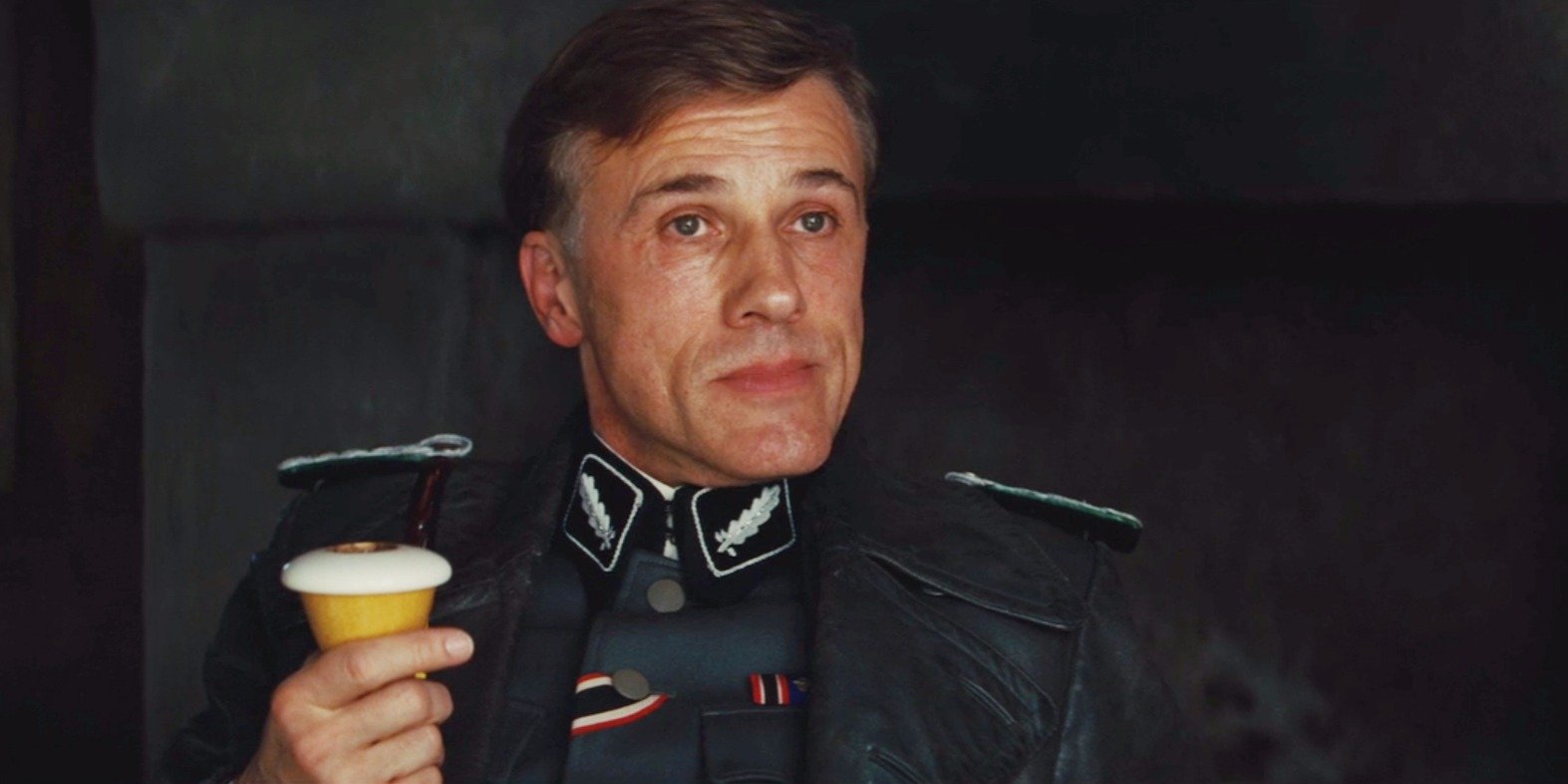
Inglourious Basterds
When two people gather in a room to talk things through like adults, what happens in mostly pretty standard; if everything goes right, both individuals shake hands and go back to the world with a smile on their faces and one reason less to worry.
However, in the movie world, when you see a dialogue-heavy scene coming, you know it’s about to go down.
Unlike the real world, two individuals having a conversation can’t just be a friendly encounter (unless you’re watching an indie, low budget or Richard Linklater film); tension has to be present, with plenty of drama and rage. In short, shenanigans are likely to ensue and at the very least, something important will be revealed that may change the course of the plot.
If you decide to continue reading this amazing list, you’ll find the 20 best one-on-one verbal confrontations of recorded film history.

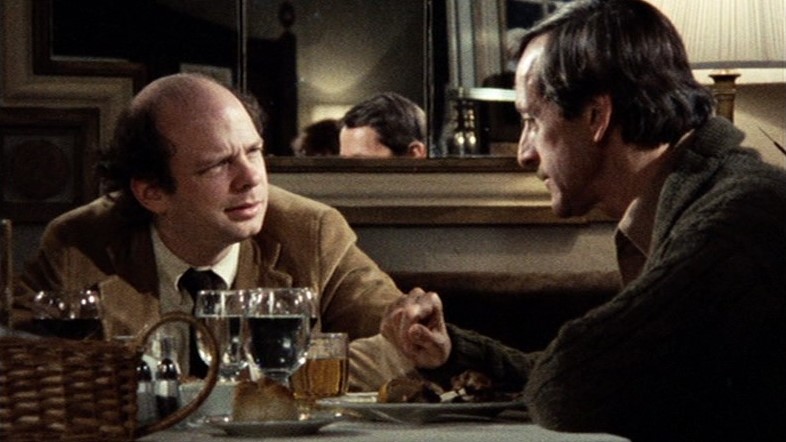
20. My Dinner with Andre
my-dinner-with-andre
This movie consists of a single scene of dialogue, stretched for over two hours, in which the protagonist reunites with an old friend named Andre, who has been involved in an interesting series of activities in a search for real meaning in his life.
Wally calmly listens as his friend enthusiastically describes what he has been doing all this time: being buried alive, making a weird play with no audience in a forest, adopting a Buddhist monk for a few weeks, joining a group of people who were trying to achieve a kind of enlightened extra-human state. Andre seems to be into new age culture, and he and Wally are very dissimilar.
Watching them talk for almost two hours nonstop is quite interesting. The protagonist disagrees with Andre’s extremism about how the modern world is pointless, but he does appreciate the comforts that technology offers, whereas Andre prefers a more animalistic and natural state of being and savagely critiques the vices and problems of our contemporary civilization.
Their philosophical dissertations show some of the blatant issues Western society has to face, such as alienation, routine, self-deception, lack of empathy. It’s an analysis you shouldn’t miss.
Best lines: Andre: “Our minds are just focused on these goals and plans, which in themselves are not reality.” Wally: “Goals and plans are not… they’re fantasy. They’re part of a dream life.”

19. Manhattan
Manhattan
All Woody Allen films are dialogue driven. His scripts are influenced by a number of literary authors, and most of his texts could be easily adapted into a play. He also borrows often from the Hollywood golden era and classic foreign masterpieces, such as “Casablanca”, “8½”, “Citizen Kane” and “The Seventh Seal”.
“Manhattan” is a mixture of many of his inspirations, including New York, which may be considered his biggest one. Allen plays Isaac, a chatty New Yorker who’s dating a 17-year-old named Tracy. He doesn’t seem to be taking the relationship seriously, but Tracy has fallen in love with him.
Throughout the whole movie, Isaac treats Tracy like a child and is condescending toward her in an attempt to undermine their mutual affection. He prefers the pseudo-intellectual Mary, but it’s clear that he would rather be with Tracy if not for her age.
At the end, Isaac’s attempts to seduce Mary get hampered by his best friend. Isaac runs toward Tracy’s building, realizing that he had always loved her, while the wonderful soundtrack transports us into ancient Hollywood history. Gershwin’s famous “Rhapsody in Blue” carries the whole movie until the end.
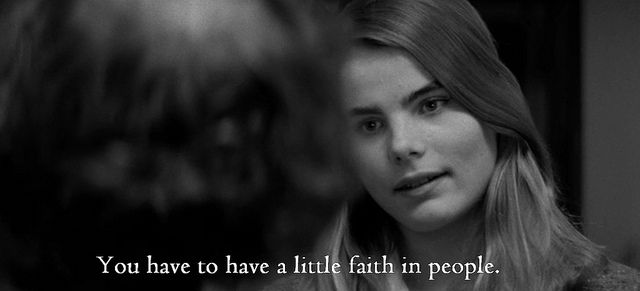
She’s getting ready to leave for London on a scholarship, and when he realizes that it’s too late to convince her, Tracy comforts him by saying that when she comes back in six months, she would still love him. Isaac is not so sure about that, but is convinced when Tracy says the famous line: “You have to have a little faith in people.”
This scene nicely ties up the film in a nice bow. Shot in glorious black and white, and with amazing performances from both actors, it’s one of the greatest dialogues in film history.
Best lines: Tracy: “You have to have a little faith in people.”

18. The Third Man
The Third Man mono
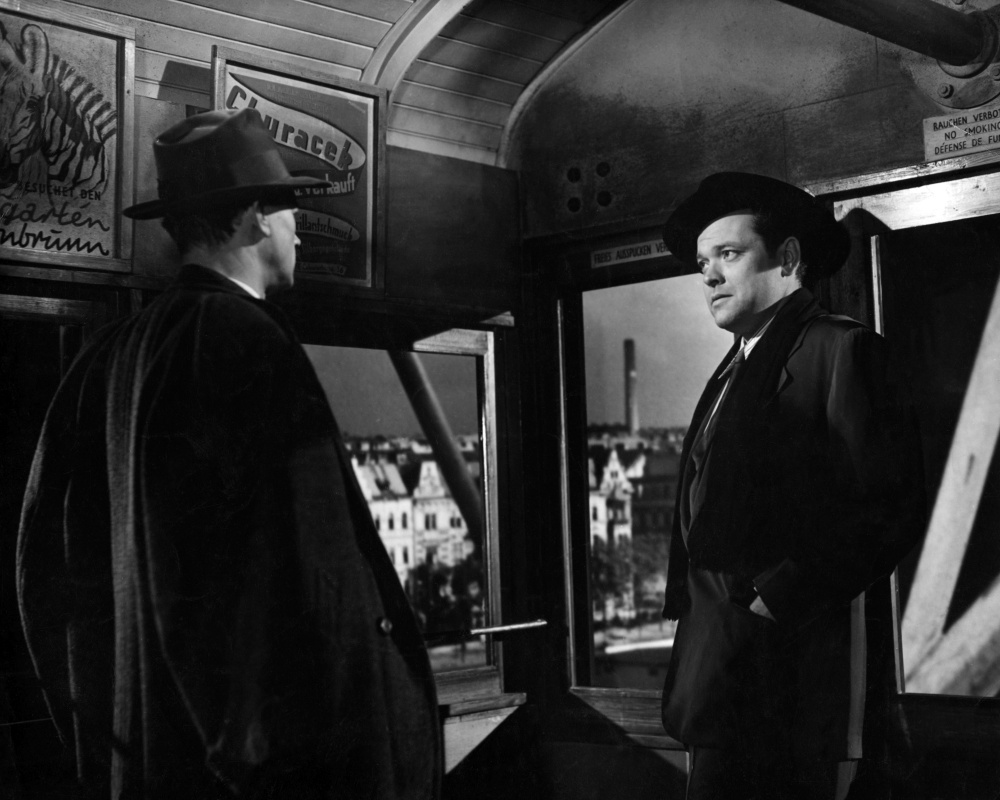
Considered one of the best classic thrillers of all time, this movie’s smart plot was decades ahead of its time, inspiring future generations of filmmakers with its flawless black-and-white aesthetic and memorable scenes; namely the famous dialogue on the Ferris wheel.
Holly Martins has arrived to post-World War II Vienna, following an invitation from his old friend Harry Lime. Just after his arrival, Holly is informed that Harry was run over by a truck and died instantly. He assists with the funeral and everyone seems to think that Harry was a criminal. Holly then starts a difficult investigation process to prove the innocence of his best buddy.
After asking around, the protagonist is convinced that his friend isn’t what he used to be. Everything points at Harry being a cruel racketeer who faked his death, so Holly tells one of Harry’s associates that he’ll be around the Ferris wheel waiting for him to clear things up.
Harry, played by no less than Orson Welles, joins Holly at the meeting spot as though everything were normal. Holly starts talking about all the evidence he has found against him; meanwhile, the Ferris wheel has started spinning, and we see the landscape moving behind Harry. He doesn’t seem to care about any of this and threatens Holly’s life if he were to rat him out. The dialogue itself turns very poetic, as Welles’s character is marvelously written, and he carries the conversation like a master of manipulation, while his friend is perplexed at his change of personality.
This is a key moment for the film, in which Welles solidifies his awesome performance and the mystery is cleared.
Best lines: Harry Lime: “Don’t be so gloomy. After all it’s not that awful. Like the fella says, in Italy for 30 years under the Borgias they had warfare, terror, murder, and bloodshed, but they produced Michelangelo, Leonardo da Vinci, and the Renaissance. In Switzerland they had brotherly love – they had 500 years of democracy and peace, and what did that produce? The cuckoo clock. So long, Holly.”

17. Goodfellas
goodfellas-tommy
In an attempt of reprising the role of “himself”, Joe Pesci plays a psycho mobster named Tommy, who’s as crazy as he’s funny, although Pesci’s character is in denial of those aspects of his personality.
Martin Scorsese structures this dialogue scene wonderfully, using two camera setups that allow us to see each character’s reactions.
Tommy is telling a story to a group of other mobsters in a restaurant, about how he refused to be interrogated by cops when they approached him as he was resting in a park. Everyone is laughing due to the actor’s hilarious way of telling the tale and Henry Hill (played by Ray Liotta) instinctively says to Tommy that he’s funny, who replies, “funny how?” Henry doesn’t know how to answer and starts mumbling, so Tommy questions him again with a bit of anger in his voice, as silence takes over the table.
Soon enough, Henry finds out that Tommy is only messing with him and everybody starts laughing again. However, we also see how much of a lunatic Tommy is, which makes us wonder if Henry is safe by his side.
This scene is based on a real experience Joe Pesci had when working on a restaurant. He told a mobster that he was funny and things went downhill from there, as the guy didn’t take the compliment too fondly. The director didn’t add this bit to the filming schedule, only he and Joe knew about it, so the other actors improvised around Pesci’s great performance, and their reactions are real and priceless.
Scorsese portrays the relationship between these two in a single masterful dialogue that, on top of being amusing, establishes the movie’s whole rhythm, which is dynamic and unexpected.
Best lines: Tommy DeVito: “No, no, I don’t know, you said it. How do I know? You said I’m funny. How the fuck am I funny, what the fuck is so funny about me? Tell me, tell me what’s funny!” Henry Hill: [long pause] “Get the fuck out of here, Tommy!” T: [everyone laughs] “Ya motherfucker! I almost had him, I almost had him. Ya stuttering prick ya. Frankie, was he shaking? I wonder about you sometimes, Henry. You may fold under questioning.”

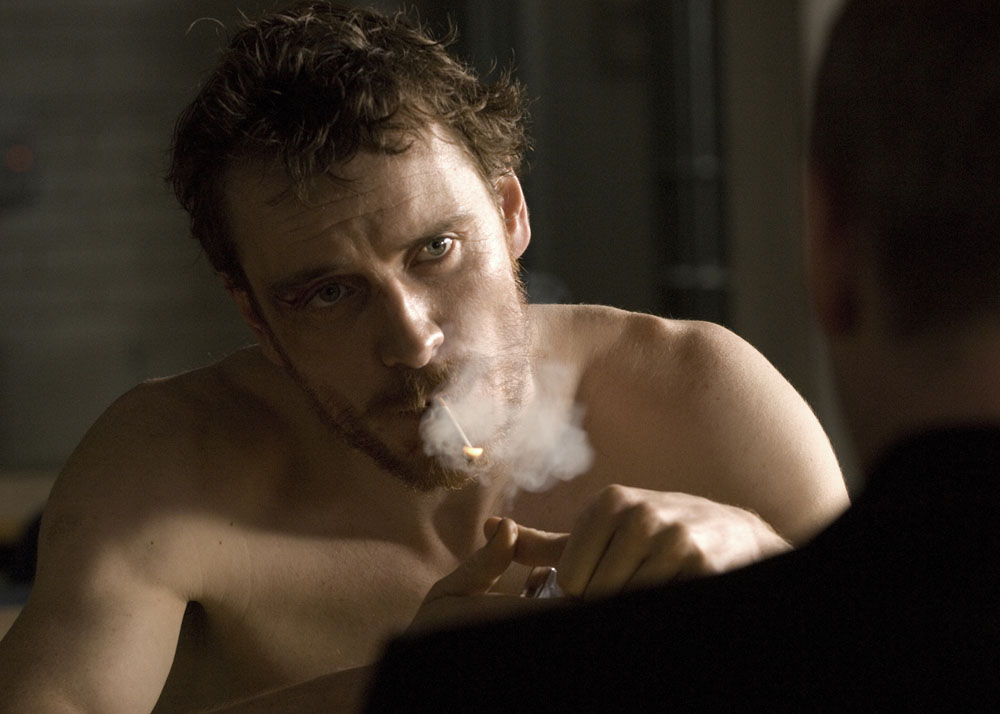
16. Hunger
hunger-michael-fassbender
Steve McQueen cast young Magneto and Davos Seaworth for his first feature film. I was surprised when I didn’t encounter any swordfights or metal bending/murdering in the whole film’s runtime, although I did came across a sweet dialogue scene.
Michael Fassbender plays Bobby Sands, an Irish republican who leads a hunger strike while imprisoned. He has a conversation with Father Dominic about his life, religion and motives, a relaxed chat while smoking and displaying a great amount of chemistry. The camera is static as both men interrogate one another.
Both actors do a great job, as filming a single take from the same angle and with an extreme amount of lines to remember couldn’t have been an easy task. Though we only see their shapes due to the dim lighting for most of the scene, the performers are able to express every emotion and keep us interested for almost 30 minutes and with minimal cuts.
Best lines: Father Dominic Moran: “I want to know whether your intent is just purely to commit suicide here.”
Bobby Sands: “You want me to argue about the morality of what I’m about to do and whether it’s really suicide or not? For one, you’re calling it suicide. I call it murder. And that’s just another wee difference between us two. We’re both Catholic men, both Republicans. But while you were poaching salmon in beautiful Kilrea, we were being burnt out of our house in Rathcoole. Similar in many ways, Dom, but life and experiences focused our beliefs differently. You understand me?”

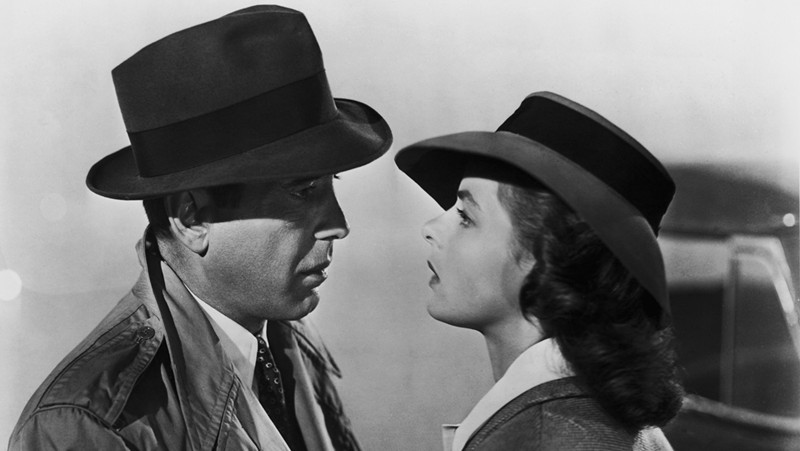
15. Casablanca
Casablanca
Holding the unbeaten record of the world for “most times the movie’s title is mentioned in its runtime”, “Casablanca” is really the classic of classics. People don’t usually think that is the best movie ever made, but within its historical context, “Casablanca” set the tone for decades of cinema to come.
American Rick Blaine (Humphrey Bogart) and his squeeze Ilsa Lund (Ingrid Bergman) were forced to flee Paris just when their relationship was consolidating, because Hitler just couldn’t go down without committing every crime imaginable, he also had to cockblock Humphrey Bogart. However, Ilsa suddenly decides to ditch him with a letter, which is the equivalent of sending your loved one a Snapchat of you raising your middle finger as a breakup tactic.
They see each other again, after a long time, in Rick’s popular nightclub. He possesses some special visas that Ilsa and her revolutionary husband need in order to escape from the Third Reich persecution and flee to the United States. He’s reluctant to give up those documents, because of the great harm Ilsa caused him; Bogart’s character often states that, after what happened to him, he only cares about himself.
However, in the final scene, Rick makes a huge sacrifice for the greater good. He was planning to give Ilsa’s husband the visa but stay with his former girlfriend in Casablanca, because she claimed she still loved him. At the moment of truth, he gives them both the visas and stays alone, with one of the most memorable lines in the history of film.

Thursday, November 28, 2019

Coma Splice Repeat Offender


As editing continues, and all writers here as well professors of English, this is common.  We want the elements of English to flow and express what we want our manuscripts to say. 


Comma splices are similar to run-on sentences, which join two independent clauses without any punctuation and without a conjunction such as and, but for, etc. Sometimes the two types of sentences are treated differently based on the presence or absence of a comma, but most writers consider the comma splice as a special type of run-on sentence.[4] According to Garner's Modern English Usage:
[M]ost usage authorities accept comma splices when (1) the clauses are short and closely related, (2) there is no danger of a miscue, and (3) the context is informal [...] But even when all three criteria are met, some readers are likely to object.[4]
Comma splices often arise when writers use conjunctive adverbs (such as furthermore, however, or moreover) to separate two independent clauses instead of using a coordinating conjunction.[6]

In literature

Comma splices are also occasionally used in fiction, poetry, and other forms of literature to convey a particular mood or informal style. Some authors use commas to separate short clauses only.[1] The comma splice is more commonly found in works from the 18th and 19th century, when written prose mimicked speech more closely.[7]
Fowler's Modern English Usage describes the use of the comma splice by the authors Elizabeth Jolley and Iris Murdoch:
We are all accustomed to the … conjoined sentences that turn up from children or from our less literate friends… Curiously, this habit of writing comma-joined sentences is not uncommon in both older and present-day fiction. Modern examples: I have the bed still, it is in every way suitable for the old house where I live now (E. Jolley); Marcus … was of course already quite a famous man, Ludens had even heard of him from friends at Cambridge (I. Murdoch).[8]
Journalist Oliver Kamm writes of novelist Jane Austen's use of the comma splice, "Tastes in punctuation are not constant. It makes no sense to accuse Jane Austen of incorrect use of the comma, as no one would have levelled this charge against her at the time. Her conventions of usage were not ours".[7]
The author and journalist Lynne Truss writes in Eats, Shoots & Leaves that "so many highly respected writers observe the splice comma that a rather unfair rule emerges on this one: only do it if you're famous".[9] Citing Samuel Beckett, E. M. Forster, and Somerset Maugham, she says: "Done knowingly by an established writer, the comma splice is effective, poetic, dashing. Done equally knowingly by people who are not published writers, it can look weak or presumptuous. Done ignorantly by ignorant people, it is awful".[9]


Add some examples of Coma Splices, then correct them.    


Tuesday, October 15, 2019

Have a question or a post?

Give it to us, so we can reach out to more people.  Click on our names on blogger, and it will take you to our emails.  Send us email, then we send you an invite and you are approved.   This is easy! Many on this new site are trusted users and your variety of topic on writing, ethics and words and brush are just what we are looking for.
Since Mr. Write is on many other blogs, you can also be approved instantly for those, too, just in case you get the urge to in the future.

Thanks to all who have stuck it out since the end of the channels.  Hope you have a great day!

Writing Concepts

Good morning, fellow writers. A little extra coffee this morning as we get ready for colder weather coming in the next couple days.   What project are you working on now?  The same one or a new one?  I am working on figuring out the best way to separate the parts in my book 2.
My book has four parts to it.  There is part 1, part 2, part 3, and part 4.   My current character in part 2 changes scenes and also with a new situation.  It would seem logical for these sections to be too long or too short, nor stall the story.  

Editing is ongoing and I am hopeful to be halfway this week, but it seems like two scenes need extra attention.  I want it to be right.  Many times the scenes will keep going when I'm ready to sleep, but my brain is not. What a dilemma when the idea of sleep is to be a functional parent the next day as one of the kids got over a stomach bug.  Life happens where priorities come up.

One other concept is have two clear sheets separating the parts or scenes that seem optional, like giving the eyes and mind a complete break before the next scene.


Wednesday, October 2, 2019

Character Development

Good evening fellow writers.  It's been a long couple weeks and it seems like catching up is a continuous task with the house and other priorities.   Hope your projects are going well.  During my editing I came to a character that is a villain.  Even if the main hero characters are created, the villian also needs to have his well roundness.  I have a character sketch and make him stand out more than a cardboard figure in writing.
In your writing how did you strengthen your villain that moved the story along with the plot? What methods did you use?
If you are a reader, what did the writer do well to express the character of the villain?   Thank you!

Thursday, September 19, 2019

Author Highlights

Though J.R.R. Tolkien passed away in 1973, he has never really stopped publishing. For decades his son and literary executor Christopher Tolkien has painstakingly catalogued and edited his father’s papers, creating new books out of unfinished and unpublished manuscripts. Most of those tales delve deep into the history of Middle-earth, the fantasy realm where Tolkien’s best known works, The Hobbit and The Lord of the Rings series take place. Now, it’s likely that work will come to an end with one last Tolkien book. Critic Andrew Ervin at The Washington Post reports that The Fall of Gondolin, which will be released tomorrow, is likely J.R.R. and Christopher Tolkien’s swan song.

While this story may be the last Tolkien book to be published, it is actually an early tale and foundational to the author’s entire concept of Middle-earth. It was first written in 1917 while Tolkien was recuperating in a hospital from trench fever after the Battle of the Somme. “It’s a quest story with a reluctant hero who turns into a genuine hero—it’s a template for everything Tolkien wrote afterwards,” John Garth, author of a book about Tolkien’s experience in World War I tells Alison Flood at The Guardian. “It has a dark lord, our first encounter with orcs and balrogs—it’s really Tolkien limbering up for what he would be doing later.”

Christian Holub at Entertainment Weekly explains that the new book tells the tale of Tuor, a man living in an age where the world is dominated by the dark lord Melko—known in other Tolkien books as Morgoth. Only one place, the hidden Elvish city of Gondolin has resisted his reign, and Tuor is sent to find the place. He does, but so do the dark forces of Melko. In the grandest Tolkien battle scene outside of The Lord of the Rings, the author describes a mechanized army, similar to the newly introduced mechanized warfare he’d witnessed during the Great War, falling on the city.
The new book, however, isn’t just one tale. Instead, Holub explains that Tolkien rewrote the story several times, changing details and character attributes. In 1951, he took a stab at writing a more narrative version of the story versus the mythological and epic versions he produced before, but abandoned that work when his publisher showed little interest. The new volume collects all of the versions including historical notes and explanations from Christopher Tolkien.

Last year, Tolkien the Younger, who is now 93 years old, published Beren and Luthien, the second of what his father considered the three “great tales” of early Middle-earth. In the preface to that work, Christopher Tolkien suggested it was the last work he would edit, and possibly the last official work in his father’s oeuvre. So fans and literary scholars were surprised when earlier this year Tolkien announced that he was planning on publishing The Fall of Gondolin, the third and final Great Tale.

While none of the tales are quite as compelling as the journey of Bilbo or Frodo Baggins, they are remarkable for what they represent. Before Tolkien set his hobbits off on their adventures, he spent decades creating an entire world, including an entire ancient history, to couch them. It’s a feat of world-building that few, if any, other authors have achieved so successfully. “What makes The Hobbit and Lord of the Rings work as well as they do is that they are set into this cultural background with its own history and languages,” Alan Lee, who created color illustrations for the new book and the other Great Tales tells Holub. “You get so much more from those particular stories if you actually delve back and enjoy the mythology of Middle-earth. In that process of the myths changing and developing, you get all these echoes of the earlier stories running through the later ones. It makes the whole thing richer and more satisfying and more dense.”

It’s unclear whether someone else will step in and scour Tolkien’s papers for other unpublished or unfinished works, though it’s hard to imagine there’s much left to find. Since the 1970s, Christopher Tolkien has edited 24 books of Tolkien’s writing including The Silmarillion, a history of the elves, a 12-volume History of Middle-earth series, the most recent Great Tales, as well books of his father’s academic writings.

Last year, Tolkien resigned as director of the Tolkien Estate. But there’s more Middle-earth content on the way, even if it didn’t originate at J.R.R. Tolkien’s pen. Soon after Christopher Tolkien’s resignation, the estate sold TV rights to Amazon, which is in the process of creating a new television series, and possibly more than one, based in the fantasy world.

Though I personally never read his work, I want my style to be my own and not fringed on by others.  I did see all the movies, though, but the books I am sure are far more better.
https://www.smithsonianmag.com/smart-news/jrr-tolkiens-final-posthumous-book-published-180970164/


Fall of Gondolin

Best Productive Time

Most writers have a fixed time they start on their work.   Before the kids, my old schedule was get up at 5:30 AM and work on the first chapter or scene in progress. I would work until 12 PM and have lunch, and tend to home chores or other stuff that the home front needed.  I would work Monday thru Friday, and use Friday as my review day what was written and see what needed to be revised and so on.  Now with kids and the routine change,  put my writing a bit on the back burner.  Priorities especially when we don't have a sitter and I am slow to trust anyone besides family to watch our children. Things just slowed down a bit, however reading took the place of writing when I had about an hour or so.

Now that my schedule is almost again at the old schedule, my productivity has increased as well having a peace of mind that my story flowed better and getting closer to the finish.  Remember to save your work!  Don't assume a flash drive does it all as some may recall the dilemma that happened last May.

What is your usual work routine on your writing? Some love working into the night.  I used to in my younger days, write till 3 AM especially on a scene that was intense and my brain was still awake.  With kids my sleep time falls around 9:30 PM to 11 PM if it is a writing night.  It depends on the level of energy I still have.

Good luck on your manuscripts!

Thursday, September 12, 2019

Anne River Siddons


UNITED STATES - 1997: Author Anne Rivers Siddons sitting in a garden. (Photo by Thomas S. England/The LIFE Images Collection via Getty Images/Getty Images)

Her Legacy, her Writing Way
gone at 83


Anne Rivers Siddons, best-selling author of "Peachtree Road" and a member of the Georgia Writers Hall of Fame, has died.  
Her stepson David Siddons confirmed her death in the Charleston Post and Courier. He said Siddons, 83, succumbed to lung cancer Wednesday at Medical University Hospital in Charleston.  
Born Sybil Anne Rivers on Jan. 9, 1936, in Fairburn to Katherine and Marvin Rivers, a school secretary and a lawyer, respectively, Siddons attended Campbell High School, where she was a cheerleader and homecoming queen. After graduation she attended Auburn University, where she was a member of Delta Delta Delta sorority and wrote for the student newspaper, The Auburn Plainsman, which famously fired her for writing columns in favor of integration. The incident inspired the plot for Siddons' debut novel, "Heartbreak Hotel" (1976), which was made into the feature film "Heart of Dixie," starring Ally Sheedy, Phoebe Cates and Treat Williams, in 1989. 


Before she became an author, though, Siddons worked as an advertising copywriter, and as a writer and editor for Atlanta magazine alongside founder Jim Townsend. In 1966, she married Heyward Siddons, a Princeton graduate and a partner in Phoenix Printing, who made her a stepmother to four boys.  
Success as an author came easy to Siddons. In 1974, after reading one of her articles in Atlanta magazine, an editor at Doubleday sent Siddons a letter requesting a manuscript for possible publication. 
"I literally thought a friend of mind had stolen some Doubleday stationary," Siddons told the AJC in 1986.  
She sent him a batch of previously published work, a collection of personal essays about her youth, her career and her hometown, and it was published in 1975 under the title "John Chancellor Always Makes Me Cry." 
Two years later she published the first of her 19 novels, many of them set in Atlanta and all of them centered around strong Southern women. Her most commercially successful novel was "Peachtree Road" (1988), a saga that spans 40 years and follows an ill-fated romance that links two wealthy Buckhead families. "Prince of Tides" author Pat Conroy called it "the Southern novel of our generation." 


Siddons and Conroy were close friends, and their ascension among Atlanta's literati coincided during a publishing heyday in the city when their mutual friend, Cliff Graubart, owner of the Old New York Book Shop, had a storefront on Piedmont Road and later Juniper Street, where he hosted legendary book signings and parties in the ‘70s and ‘80s. Their social circle also included cookbook authors Nathalie Dupree and Graubart's wife, Cynthia. 
"Annie was a magnificent cook, fed us all, lived in a beautiful house, which none of us did then," Conroy said about those days in "My Exaggerated Life" (2018), his posthumously published memoir as told to Katherine Clark. "Annie and Heyward's was this post of civilization that we could always go to, were always invited to. They were an adult couple who were running a household that looked like a household, as opposed to the rest of us who lived in the inside of potato chip bags. If they ever had arguments, I never saw it. If they ever got mad at me, I never knew it. Those two people brought great kindness, great times of happiness into my life."  
In 1993, Siddons published "Hill Towns," a novel about a band of friends touring Italy that was inspired by the Graubarts' European honeymoon, on which Conroy, Dupree and the Siddons tagged along.  
Also notable among Siddons' novels is "The House Next Door" (1978) about a woman who moves into a home occupied by an evil presence that preys on its inhabitants' weaknesses. Made into a TV movie starring Mark-Paul Gosselaar and Lara Flynn Boyle for Lifetime in 2006, the novel is cited by the master of horror writing, Stephen King, as one of the best horror novels of the 20th century in his nonfiction assessment of the genre, "Danse Macabre" (1981). 
Despite her commercial success and her admiring colleagues, Siddons' work did not garner the critical praise she'd hoped. 
"I would like to be taken a little more seriously in New York, but that's not going to happen," she told the AJC in 1998. "I will never be considered anything but a regional writer by the New York Times."  
The criticism she received for her third novel, "Fox's Earth" (1981), was particularly brutal. The manuscript for her follow-up novel was returned by her publisher, who requested a complete rewrite. 
"I just couldn't do it," she told the AJC. "So I sent the advance back." 
Six years would pass before Siddons published another book, during which time she battled depression. She credited therapy and medication for aiding her recovery and restoring her desire to write, which she did with a vengeance, publishing 11 books over the next 13 years. 
Citing traffic, unbridled development and the destruction of historic buildings, Siddons and her husband left Atlanta for Charleston, S.C., in 1998. 
"Atlanta had a very specific feel to it in the ‘60s," she told the AJC. "It doesn't have that feel anymore. It seems too homogenized. In Charleston, there's development, but more historic buildings have been saved here than in any other big city. And here they celebrate the past. They don't pretend it never happened." 
An unwavering champion of his wife's work, who read her novels-in-progress aloud every night, Heyward Siddons died after a brief illness in 2014. 
"The great, unseeable reward I received from watching the marriage of Heyward and Annie Siddons is to be a witness to the greatest love story it has been a privilege to watch," Conroy wrote on his website in a piece titled "A Eulogy for a Southern Gentleman." 
Siddons, according to the Post and Courier obituary, is survived by four stepsons: Lee Siddons; Kemble Siddons and his wife, Carol; Rick Siddons and his wife, Julie; David Siddons and his wife, Tracy;, and three step-grandchildren.

https://www.wsbtv.com/news/local/atlanta-novelist-anne-rivers-siddons-dies-at-age-83/985573325